Improve Google Rankings in Germany: The Complete Guide for the DACH Market
Learn how to improve your Google rankings in Germany with proven strategies tailored to the DACH market. Covers local SEO, AI Overviews, measurable KPIs, and more.
!Quick Summary
Germany (DACH) requires higher trust signals (Impressum/GDPR) than most markets. Local SEO is dominant via GBP and specific German directories. AI Overviews are shifting click patterns, requiring highly structured, authoritative content to maintain visibility.
If you're trying to improve your Google rankings in Germany, you're stepping into one of Europe's most competitive and nuanced digital landscapes. The German market — often referred to as the DACH region (Deutschland, Austria, Switzerland) — operates by its own rules. Consumer expectations are higher, data privacy standards are stricter, and trust is earned slowly but valued deeply.
This guide is designed to give you everything you need: concrete, actionable strategies to improve your Google rankings in Germany, close the content gaps that most SEO resources overlook, and position your business for sustainable organic growth. We'll cover local SEO specifics, the growing influence of AI-powered search results, and the measurable KPIs you need to track success.
Why Google Rankings in Germany Are Different
Germany is not just a large European market — it is a uniquely demanding one. According to Statista, over 92% of all search queries in Germany are processed through Google, making it effectively the only search engine that matters for most businesses operating in the DACH region.
German Users Trust Differently
German internet users are known for their high standards around privacy, transparency, and credibility. They are less likely to click on unfamiliar brands and more likely to research extensively before converting. This means that improving your Google rankings in Germany isn't just a technical exercise — it's a trust-building exercise.
The Legal and Regulatory Landscape
Germany enforces some of the strictest data privacy regulations in the world, largely shaped by the GDPR and Germany's own BDSG. Your website's compliance — cookie consent, data handling transparency, imprint requirements — directly affects how users perceive your brand and indirectly affects your rankings.
The Technical SEO Foundation
Before tackling advanced strategies, your technical SEO needs to be airtight. Google's ranking systems prioritize crawlability, page experience, and site structure — and German users have little patience for slow or broken websites.
Core Web Vitals Benchmarks
Core Web Vitals have become non-negotiable. For the German market, aim for a Largest Contentful Paint (LCP) under 2.5 seconds. Mobile users account for over 60% of searches and are particularly sensitive to performance.
Local SEO in Germany: The DACH-Specific Playbook
Local SEO for Germany is an area where most generic guides fail. The DACH region has specific platforms and competitive dynamics. Your Google Business Profile (GBP) is your most powerful local asset. Complete your profile in German, collect and respond to reviews consistently, and use German-specific categories accurately.
Local Citation Building
Citation building in Germany looks different. Key platforms include Das Örtliche, Gelbe Seiten, Yelp.de, and Trustpilot.de. Consistency of your NAP (Name, Address, Phone) data across these platforms is essential.
AI Overviews and Their Impact
The rollout of AI Overviews in Germany is changing search behavior. These summaries absorb clicks from top organic results. To win, you must get your content cited within AI Overviews by using clear, structured formatting and original data.
Measuring Success: KPIs for the German Market
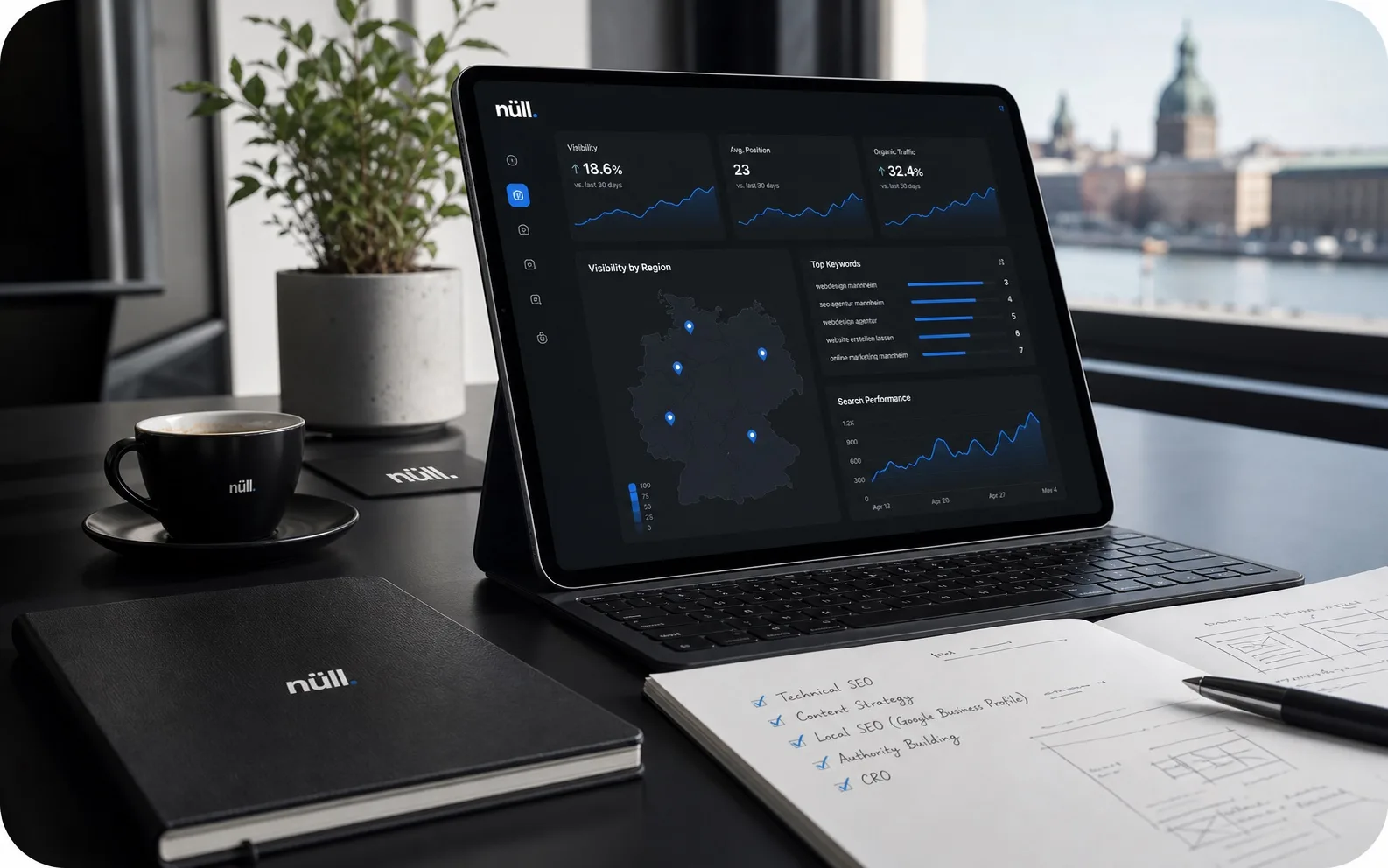
Establish clear benchmarks. Target 15–25% month-over-month growth in organic sessions. Track your organic CTR from Search Console — industry average for position one in Germany sits around 28–32%.
At nüll., we specialize in helping businesses across the DACH region build a lasting organic presence that drives real revenue. Ready to improve your Google rankings? Let's build your strategy together.

nüll.Editorial Team
nüll. builds digital infrastructure for lawyers, doctors, and service businesses in Germany - so expertise becomes visible.